Most “knowledge workers” spend an astonishing amount of time sitting. That is certainly true for me. My day job involves an inordinate amount of time staring at computer screens and pounding away on the keyboard. I compound that by spending another hour or so each day working on this site. If not for the occasional bouts of tennis, I would be a total slug.
Unfortunately, prolonged sitting has increasingly been recognized as a health risk in its own right. Even for people who exercise regularly, extended periods of uninterrupted sitting have been associated with adverse cardiovascular, metabolic, and musculoskeletal effects. In other words, spending a couple of hours on the tennis court after work does not necessarily erase everything that happened over the previous 10 hours spent sitting at a desk.
A recent study from Columbia University has revealed a remarkably simple intervention. The researchers found that taking a five-minute walk every thirty minutes substantially reduced many of the harmful physiological effects associated with prolonged sitting. Surprisingly, shorter or less frequent walking breaks produced considerably smaller benefits. Five minutes every half hour appeared to be the sweet spot.
When I stumbled across that research, I tried to emulate the study by taking short walks every 30 minutes. Like many good intentions that aren’t backed by a system, remembering to do it didn’t work very well for me. It turns out that becoming deeply immersed in solving engineering problems and writing is an excellent way to completely lose track of time.
To improve my consistency, I began setting timers. In fact, the durations recommended in this study align remarkably well with those commonly used in the Pomodoro productivity technique, which structures work into focused intervals separated by brief breaks. I frequently use the Pomodoro method when I need to be hyperproductive. It is an accepted way of getting work done, and no one ever blinks an eye at me or anyone else taking Pomodoro breaks.
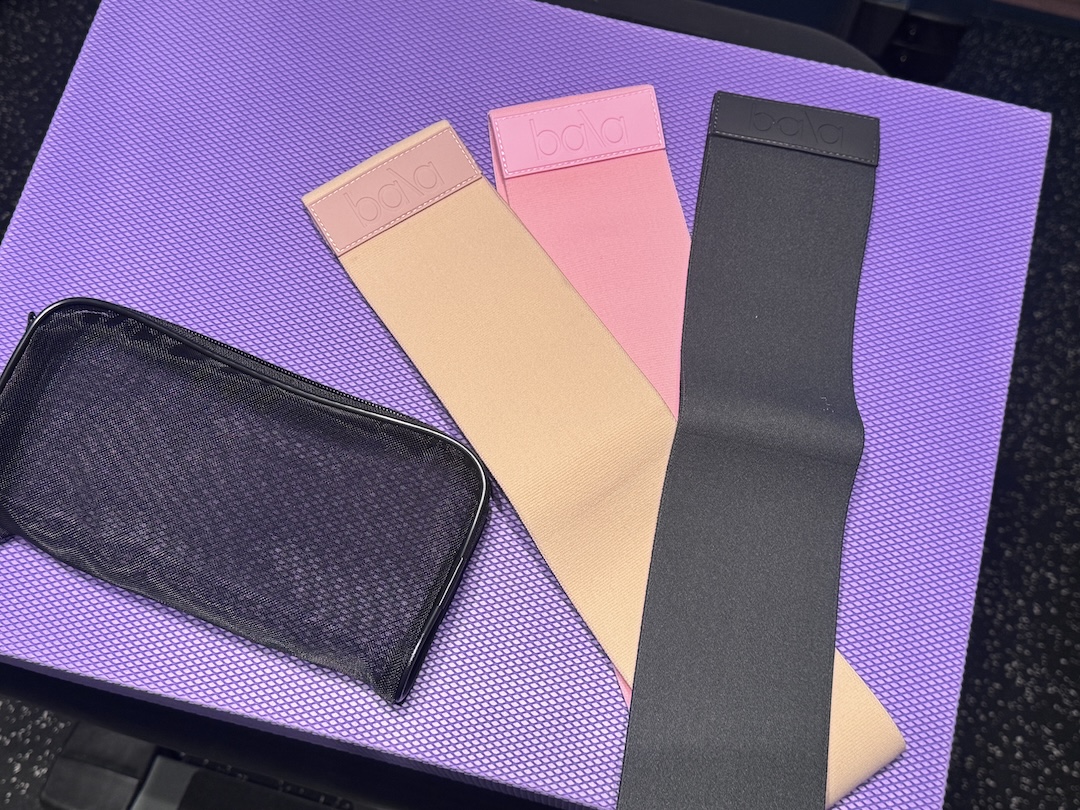
Once the consistency problem was solved, simply walking started to feel like an inefficient waste of time to me. I started exploring how to meet the movement objectives through exercises that would ordinarily be a part of my off-court tennis training.
Many of the exercises tennis players perform in the gym require very little equipment and only a few minutes to complete. So I have started crafting routines (using my Seconds Pro app, of course) filled with short 30-second training intervals that neatly fill up the five-minute block.
In other words, five minutes is enough time to complete a surprisingly meaningful block of functional tennis training. Stringing together a series of five-minute blocks adds up to something much more impactful. This has transformed my otherwise sedentary days into ones punctuated by repeated movement.
Working out in short bursts makes sense for tennis, because our sport is not competed as a single continuous effort. A match consists of a series of short athletic movements separated by brief recovery periods. As it turns out, off-court preparation doesn’t always have to take place in uninterrupted hour-long gym sessions, either.
The Columbia study found that these movement breaks often improve productivity, and I believe I have experienced the same effect. Standing up, moving around, and focusing on something entirely different for five minutes frequently makes it easier to return to a difficult technical problem with a fresh perspective. Whether that is a consequence of improved circulation, reduced mental fatigue, or simply interrupting unproductive thinking patterns, I cannot say. What I do know is that both my body and my work seem to be benefiting.
It is no secret that I enjoy reading scientific research. Many studies that, at first glance, seem unrelated to tennis often translate surprisingly well to our sport. This one was designed to reduce the health risks associated with prolonged sitting, not to improve sports performance. Yet it inadvertently suggested a practical framework for fitting meaningful off-court training into an otherwise sedentary workday.
I have always thought about fitness as something that required setting aside a dedicated block of time. This research challenged that assumption. It demonstrates that five minutes is sufficient to make a meaningful impact. When repeated several times throughout the day, the cumulative effect becomes surprisingly substantial.
Perhaps the biggest lesson is that consistency does not always require a large commitment. Sometimes it simply requires lowering the barrier to get started. I set out trying to reduce the amount of time I spent sitting. Instead, I may have stumbled onto a better way to fit tennis training into the workday.