Every Tuesday, this site looks at a training or technology concept that shapes how tennis is played. This week’s inspiration comes from a Wimbledon training compilation that offers a behind-the-scenes look at how players prepared for early-round matches before taking the court.
Among the warm-up activities featured was Iga Świątek performing lateral walks using a mini resistance loop. It is a simple exercise that builds hip strength and stability in tennis.

Lateral walks are performed by placing a mini resistance loop around the legs, typically just above the knees or around the ankles. Starting from an athletic stance with the knees slightly bent, Świątek takes slow, controlled sideways steps while maintaining constant tension in the band. The emphasis is not on speed but on maintaining posture, resisting the band’s pull, and moving with control.
That movement pattern makes perfect sense for tennis because ours is fundamentally a lateral movement sport. Players spend much of every match shuffling side to side across the baseline. Lateral walks specifically target the glutes and hip stabilizers that control side-to-side movement. Those muscles help keep the pelvis level, improve balance, reduce unwanted knee movement, and allow players to generate force more efficiently when changing direction.
The exercise also reinforces a recurring theme on this site: the importance of the kinetic chain. Efficient tennis strokes begin from the ground up. Stable hips create the foundation that allows energy to transfer through the core and ultimately into the racquet. If that foundation is unstable, power leaks out of the system long before it reaches the ball.
This drill appears frequently in professional warm-up routines because it is an outstanding activation exercise. The goal before competition is not to exhaust the muscles, but rather to wake them up. Lateral walks increase blood flow to the hips and glutes while reminding those muscles to engage before the explosive demands of match play begin. The drill activates exactly the muscle groups that tennis players rely upon for movement without creating unnecessary fatigue.
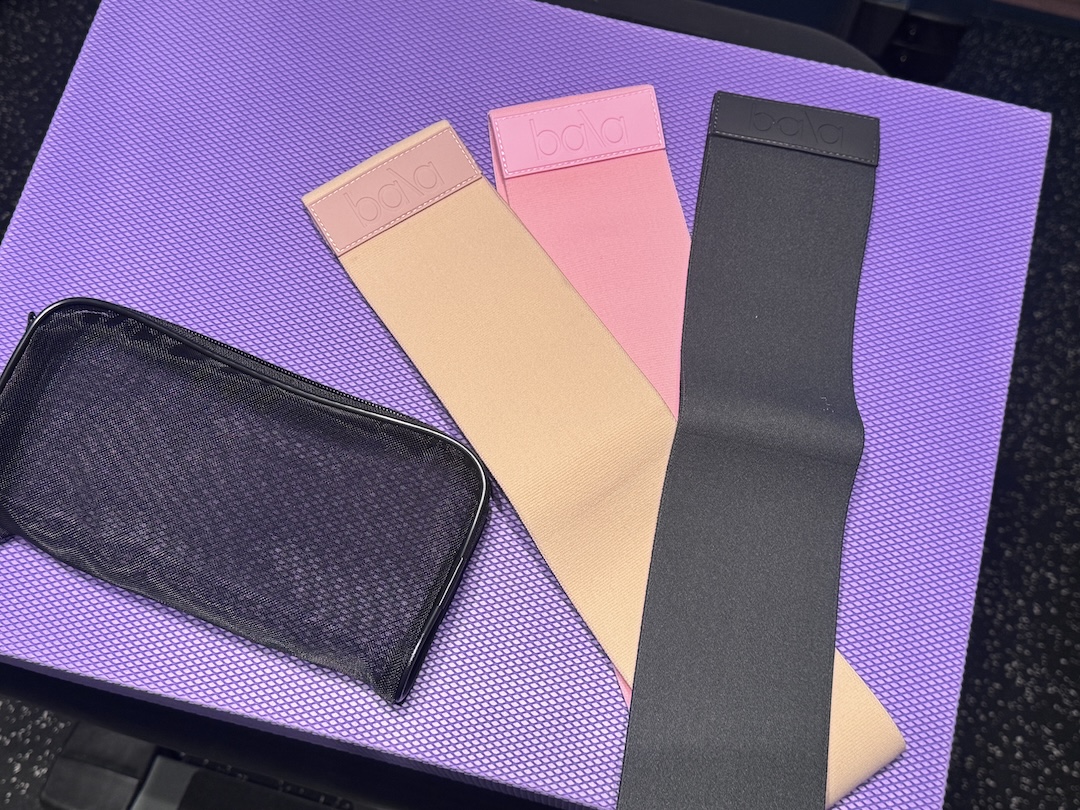
The unsung hero of the exercise is the mini resistance loop itself. These bands are among the least expensive and most versatile pieces of training equipment available. They weigh almost nothing, fit easily into a racquet bag, and can be used virtually anywhere. Despite their simplicity, they support a remarkable variety of tennis-specific exercises. Few pieces of equipment deliver as much functional value for such a modest investment.
One of the recurring lessons from watching professional players train is that the most valuable equipment is often the simplest. Mini resistance loops are firmly in that category. They are inexpensive, portable, and remarkably versatile, yet they help develop foundational athletic qualities that translate directly into better tennis. For a piece of equipment that takes up little more space than a spare overgrip, the return on investment is difficult to beat.

5-Pack Elastic Exercise Bands (<- Sponsored Link)
Fiend At Court participates in the Amazon Associates program and receives a paid commission on any purchases made via the links in this article. Details on the disposition of proceeds are available on the “About Fiend at Court” page.