Every Tuesday, this site looks at a training or technology concept that shapes how tennis is played. Lately, I have been spending a fair amount of time at my local park courts in solo training sessions. My typical routine involves hitting baskets of serves at targets followed by groundstrokes against the backboard. I have also started carrying a medicine ball in my ball cart so I can work some additional strength and movement exercises to round it out into a complete workout.
Once again, the backboard is key. One of the exercises I have recently worked into the heavy rotation is a kneeling medicine ball groundstroke wall slam. I kneel close to the backboard with the medicine ball held near one side of my body. From there, I rotate through the torso and bring the ball up and across my knee using a motion that approximates the path of a groundstroke. I release the ball into the wall, catch the rebound, stabilize myself, and immediately prepare for the next repetition.

The exercise is essentially a variation on Medicine Ball Groundstrokes, something I have written about many times on this site. However, kneeling changes the exercise considerably. A conventional medicine ball groundstroke allows force to originate in the legs and move through the hips and torso before reaching the arms. That is exactly what we want when hitting an actual tennis ball. Efficient strokes use the entire kinetic chain rather than asking the arm to generate all the power.
Kneeling deliberately takes part of that system away. Without the ability to push substantially through the legs or reposition my feet, I have to generate the throwing motion primarily through rotation of the torso and upper body. That constraint makes it much easier to concentrate on that portion of the movement without compensating with my legs.
The return from the wall adds another element. Catching the medicine ball is part of the exercise rather than merely a convenient way to get it back. I have to absorb the force of the rebound while maintaining a stable kneeling position. Once the ball is under control, I rotate back into the starting position and repeat the movement.
That combination works both sides of force production. The throw requires me to accelerate the medicine ball into the backboard. The catch requires me to decelerate the returning ball and regain control. Tennis demands the same general ability every time the body rotates aggressively through a stroke and then has to recover for whatever comes next.
Performing the exercise from my knees also makes differences between my forehand and backhand sides difficult to ignore. Like most tennis players, I am not perfectly symmetrical. Using the same medicine ball and performing the same basic movement in both directions provides immediate feedback about differences in strength, range of motion, and rotational control.
I would not use this exercise as a substitute for full-body medicine ball groundstrokes. The lower body is too important to tennis to routinely remove it from training. Instead, I see the kneeling variation as a useful complement. Sometimes isolating one portion of a movement makes it easier to understand what that part of the body is contributing before putting everything back together.
There is also a practical reason this exercise has entered my rotation. I am already carrying the medicine ball to the court, and the backboard gives me a convenient surface for throwing it. I can intersperse a few sets with serving and hitting without turning a solo tennis practice into a separate trip to the gym.
I have long argued that a medicine ball is one of the most useful pieces of equipment for tennis training. While I have a complete set in my home gym, I purchased an extra one so I don’t have to remember to transfer it back and forth. It adds some weight to the ball cart during the trip from the parking lot, but it also turns a basket of serves and some backboard hitting into something closer to a full-body workout.
As an added bonus, carrying the ball cart back to the car has become part of the workout too.
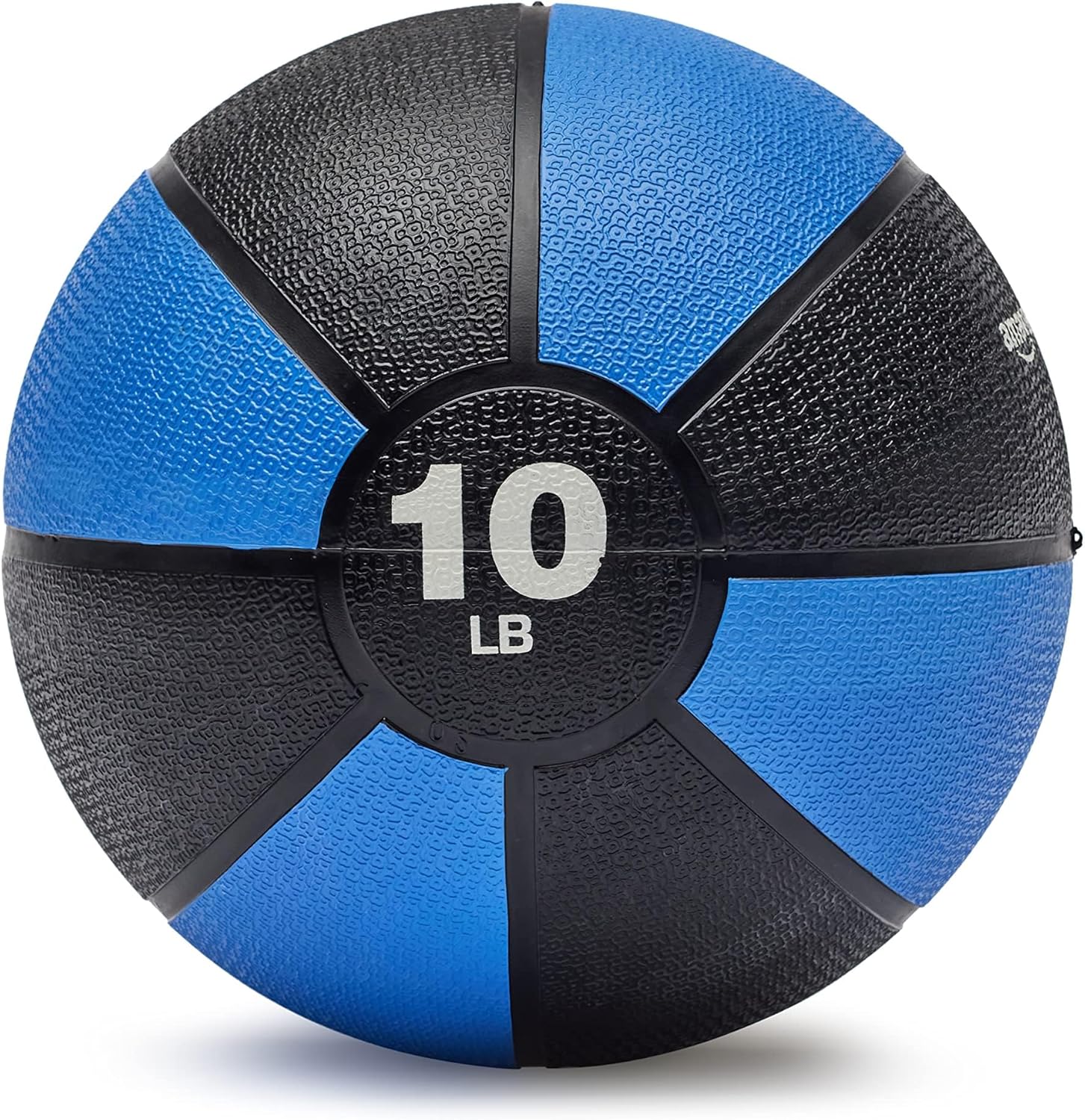
Weighted Medicine Ball (<- Sponsored Link)
Fiend At Court participates in the Amazon Associates program and receives a paid commission on any purchases made via the links in this article. Details on the disposition of proceeds are available on the “About Fiend at Court” page.