
Every Tuesday, this site looks at a training or technology concept that shapes how tennis is played. This week’s topic begins with a piece of equipment that I have written about before: temporary court lines. These portable vinyl strips are officially intended for QuickStart tennis instruction, allowing coaches to mark modified court dimensions on facilities without permanent painted lines. However, as I noted in previous posts, temporary lines have a variety of useful off-label applications for tennis training.
At the moment,a major point of emphasis in my training is my serve. I am spending a significant amount of time working on power, consistency, and directional control. Like many players, I frequently use cones as serve targets. The concept is simple. Pick a target, commit to it, and attempt to repeatedly place the serve in that very specific location. Target-based serving transforms what might otherwise become mindless repetition into deliberate practice.


When practicing alone, it can be surprisingly difficult to determine exactly where a serve landed from the opposite end of the court. That is particularly true when the ball lands near a line. It is basically just a guess on whether the ball was in or out. From the far baseline, it is impossible to tell with any confidence.
That is where the temporary lines can help. In this case, rather than using them to create new boundaries, I place them directly on the existing court lines near my serve targets. The temporary line provides visual contrast against the permanent painted line. From the baseline, that extra layer makes it significantly easier to identify whether a serve caught the line or landed just outside it. The ball’s interaction with the raised vinyl can also create a distinctive bounce, a positive indication that the ball caught the line.
(Your opponent may not play that ball, but that is a different topic…)
Many recreational players spend plenty of time practicing serves, but relatively little of that focused on location. Yet placement is often what separates a great serve from a merely good one. A well-located ball can jam your opponent, open the court, or force a weak return even when it is not struck at maximum speed.
Target serving also builds consistency. Repeatedly aiming at a specific location develops awareness of how subtle changes in the contact point and swing path influence the outcome. Over time, that awareness translates into greater confidence during match play. Confidence breeds consistency when serving.
The temporary lines are a clear upgrade that makes the process more precise. They tighten the feedback loop and prevent me from thinking that I had a great session when all my serves were just long.
One of the recurring themes on this site is that good training tools do not always need to be high-tech or expensive. Sometimes the best option is equipment that helps build clarity.
I am using my temporary lines a lot right now. They are definitely earning their keep.

Court Line Marker Kit (<- Sponsored Link)
Fiend At Court participates in the Amazon Associates program and receives a paid commission on any purchases made via the links in this article. Details on the disposition of proceeds are available on the “About Fiend at Court” page.

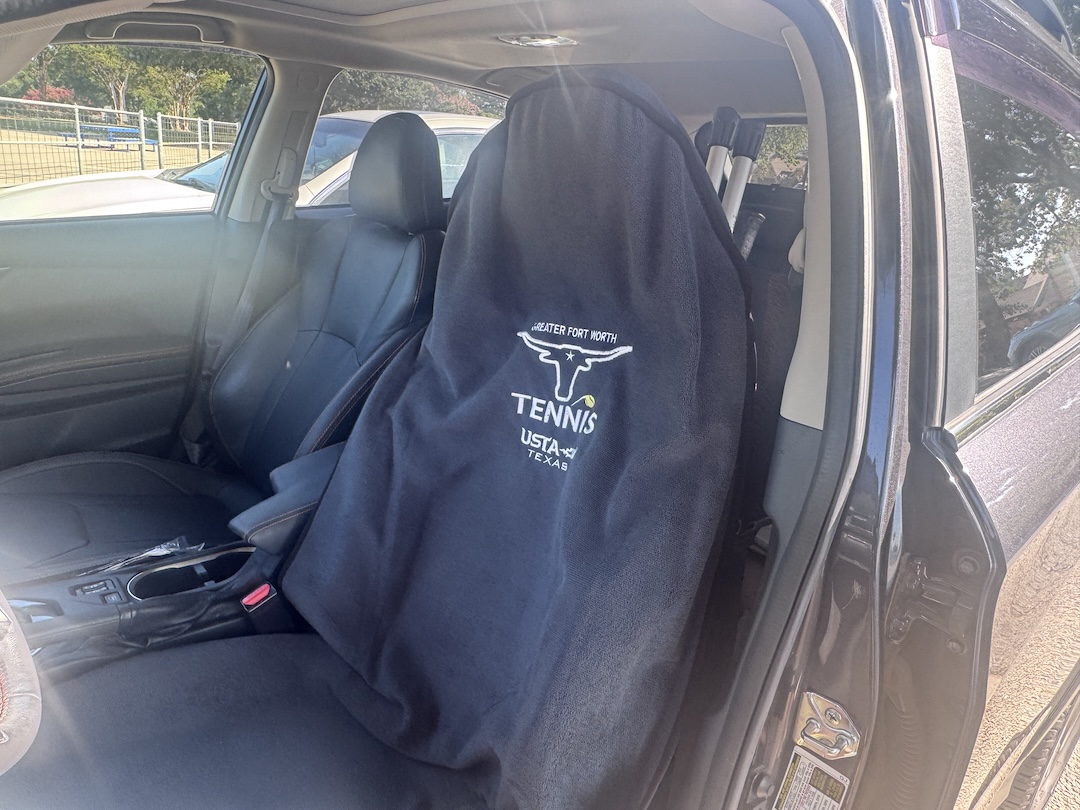
Cones and/or small towels placed where you’d like to serve are other options. One problem with all of these ideas is that the server has a tendency to peak at where the ball lands instead of keeping one’s head up through and after contact.