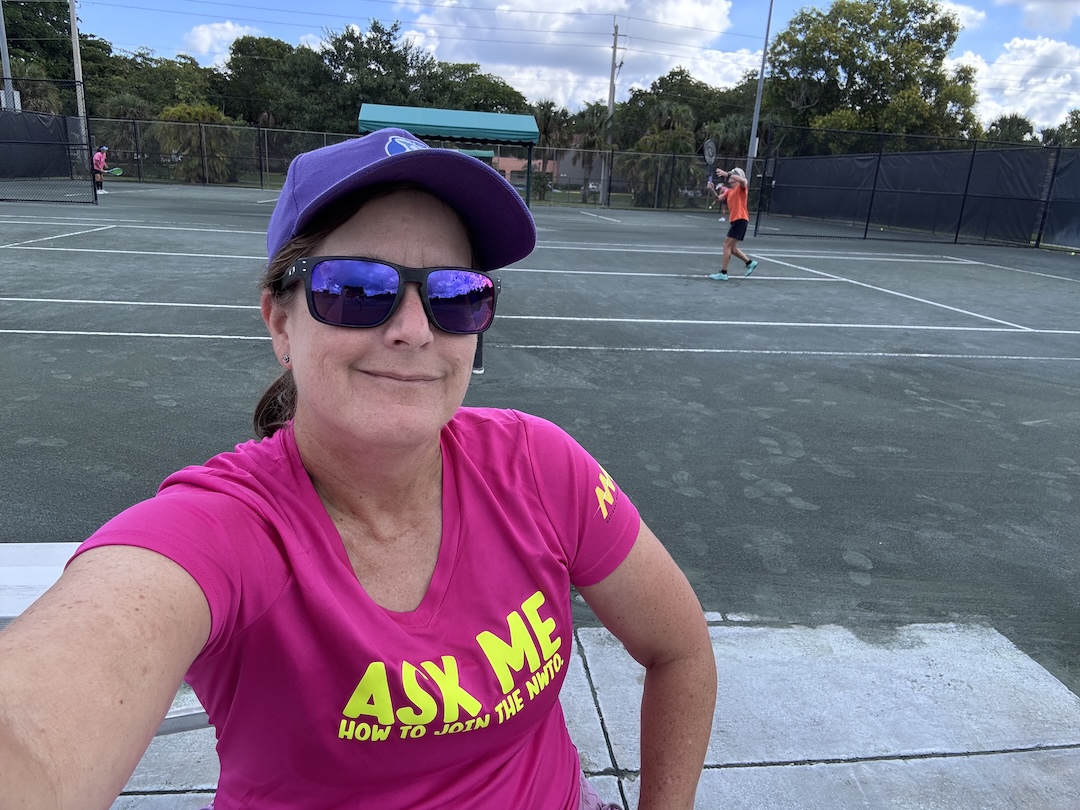
Yesterday, I shared how the nationwide air traffic control (ATC) ground stop disrupted my return from the USTA/NWTO Carol Wood Women’s Intersectional Team Championships in Fort Lauderdale. That post groused about the ATC network’s lack of resiliency and what I see as a misguided focus on replacing aging technology rather than addressing underlying architectural weaknesses.
That wasn’t the only technology failure that myself and the other player from Team Texas on my flight who decided to throw her lot in with me experienced during that travel adventure. This one had nothing to do with ATC and everything to do with customer service.
My airline apparently made every effort to operate my originally scheduled flight home. I appreciate that, although the decision to keep trying ultimately put the passengers in a difficult position. The flight wasn’t canceled until midnight. By then, most of the hotels near the airport were booked, and rideshare prices and availability were still at peak surge levels. People who hung around hoping our flight would still make it were effectively off to a late start in the competition with many other stranded travelers for a rapidly dwindling supply of available accommodations.
Fortunately, I have status and access to very competitive contractual rental car rates. In fact, it is almost always less expensive for me to rent a car rather than take two rideshare trips, even when surge pricing isn’t involved. Under the circumstances, renting a car was an easy decision. We bypassed the rental counter entirely, strolled up to our assigned vehicle, and were on our way.
Since it was after midnight, the hotel room we needed was technically for the previous calendar day. Unfortunately, the online hotel reservation systems don’t seem to understand that someone might need to book a room for a night that had already started. The apps and websites refused to search for or reserve accommodations for our immediate needs.
I recognize that the nationwide ground stop created an extraordinary surge in demand. At the same time, there’s nothing particularly unusual about someone needing a hotel room after midnight. It seems like a fairly obvious situation for a hotel reservation system to accommodate.
Of course, when technology doesn’t work, there’s always the option of calling customer service. Or at least there used to be. As it turns out, when you dial a hotel’s local number, the major chains now route that call through a national customer service center. We tried calling local numbers for prospective hotels directly, but never cracked the code on reaching an actual human anywhere in the system. The AI agent couldn’t understand what we needed.
What it could do, with remarkable persistence, was remind us that booking online was the best way to make a reservation. This was particularly irritating since if the online system was working, we never would have called seeking help in the first place. No matter how we tried to explain the situation to the bot, we couldn’t get it to understand the problem or expedite a human connection.
I decided to drive toward the area where we’d been playing the tournament. I thought it might be far enough away from the airport to still have rooms, and hotel rates in that area are somewhat less expensive than in other Fort Lauderdale resort areas. I figured we might have luck finding something there.
In the meantime, we stayed in the queue with the hotel hotline until we arrived at the first place we decided to try. That property was completely booked, but the desk clerk knew the cheat codes to get to a real human at all the nearby properties in that chain. He picked up the telephone, called other hotels in the area, and found us a room. It was a relief.
We wound up at a hotel directly across the street from the first property we tried. It was very late, and we were exhausted, although still sufficiently wound up from the evening’s events that getting to sleep wasn’t particularly easy. It was the first of several nights of short sleep before we finally made it home.
The nationwide impact of the ATC shutdown created some extraordinary circumstances. Even so, there are lessons to be learned. I sincerely hope the major hotel chains and apps learn from this experience and provide a mechanism for guests to search for and reserve rooms after midnight. Relying on a handful of live customer service agents during a national surge in demand is not an effective resilience strategy.
For all the investment going into AI customer service, there’s clearly room to do better. In our case, the most effective customer service solution turned out to be a telephone in the hands of a helpful hotel desk clerk. The systems still need actual humans.