Sometimes I sit down to write a “Training Tuesday” post with a specific topic in mind, only to discover that it winds up being about something else entirely. Today’s entry is a prime example of that phenomenon. What began as a straightforward idea about a particular drill revealed a different, and more useful, training lesson along the way.
Over the past several weeks, the Trophy Husband has been walking laps at our community recreation center as he works to rebuild his physical strength, which continues to be sapped by chemotherapy. I have started going with him and using one of the racquetball courts as a backboard while he walks. It has become a vital part of our morning routine.
As I have mentioned in previous posts, I have always loved hitting off a backboard. It is a great way to hit a lot of balls in a short period of time, and for me, it has a distinctly meditative quality. Beyond that, it serves as a useful halfway point between shadow swings and hitting live balls. It provides repetition, feedback, and rhythm at whatever speed you choose. It is an ideal environment for fine-tuning stroke mechanics.
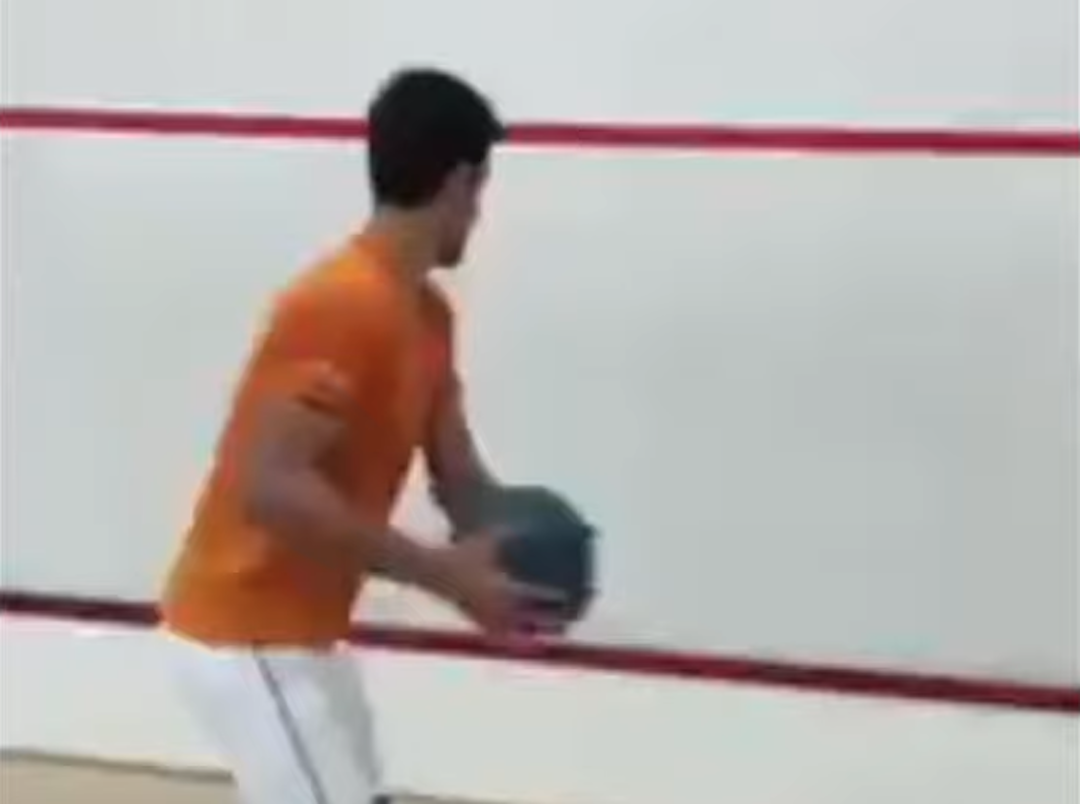
I have also been collecting video clips during these sessions as potential material for future posts. In fact, this piece was originally intended to focus on the value of practicing volleys against a wall. That lesson still holds. However, something else emerged once I started reviewing the footage. The clip included at the end of this post was taken last Friday, the day after I returned home from a week-long business trip. It was the first time I had struck a tennis ball since the previous Sunday, just before getting on the plane. The next day, Saturday, I played a 55+ league match.
My volleys were off. They were going into the court, but for reasons I could not quite put my finger on at the time, I was opening my racquet face and hitting floaty balls. They were serviceable shots, but with more loft and less velocity than intended. They were not the volleys I expected to come off my racquet. It was one of those matches where we won comfortably, yet I left the court feeling that my net play wasn’t great.
I drafted this post on Sunday morning. As soon as I began editing the video from Friday’s wall session, Saturday’s issue became obvious. I was opening my racquet face during that backboard session. While I thought I was performing a rapid reaction contact drill, it turned out to be more of a touch exercise. I took those grooved volleys, such as they were, into my match the next day.
There are a couple of valuable lessons embedded here. The first is that video remains one of the most accessible and effective tools players can use to improve their mechanics. I learn something from every clip I take and review. This is something that any player can replicate. Hitting off a backboard and using video review are low-key yet powerful investments in your tennis game. This is especially true during this time of year, during the “off-season.” As an aside, the irony that the 2026 55+ league season is clearly already underway in the off-season is not lost on me.
A second lesson here is where and when to capture the video. Match footage is incredibly useful because it shows how mechanics and tactics break down under pressure. But a practice video can be even more revealing. It may expose that you are grooving poor technique when you think you are working on something else. Those habits, good or bad, always show up later when it matters.
Sometimes the best lessons are not the ones you were initially reaching for. The insights that reveal themselves after you slow down, review the footage, and pay attention to what your practice is really teaching you may be the most valuable of all.
Fiend At Court participates in the Amazon Associates program and receives a paid commission on any purchases made via the links in this article. Details on the disposition of proceeds are available on the “About Fiend at Court” page.