
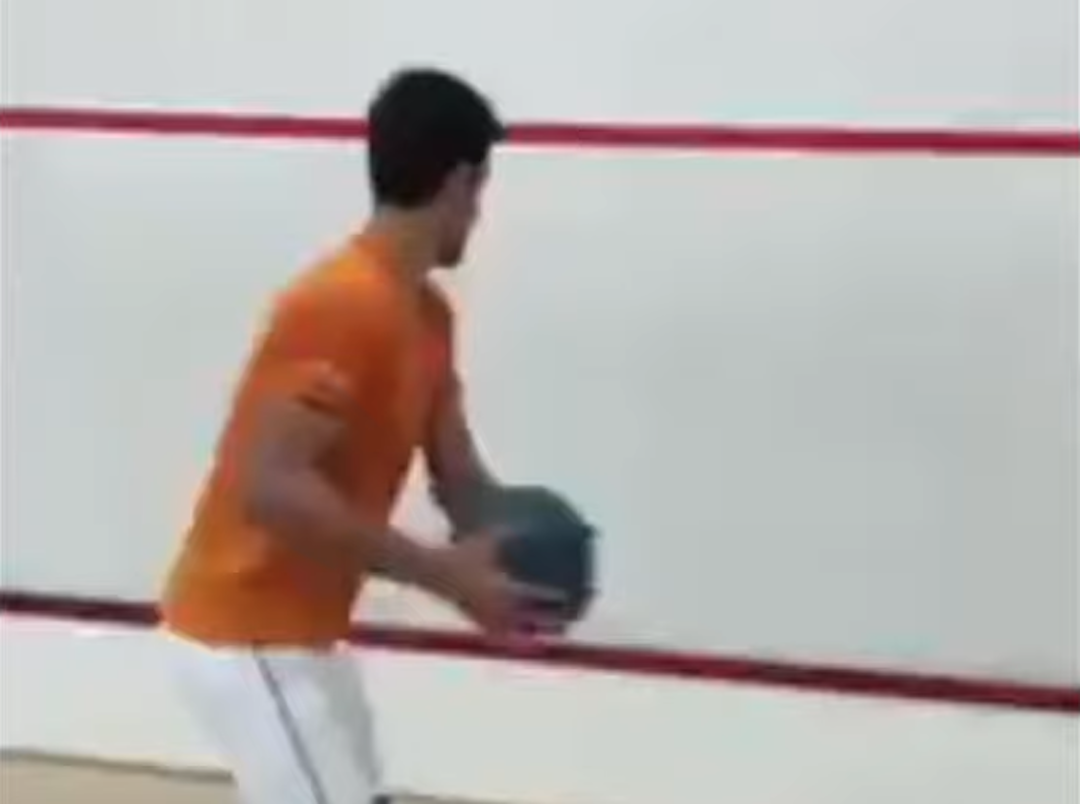
Once again, this week’s training topic is an exercise featured in the Carlos Alcaraz: My Way docuseries. However, this move features Novak Djokovic rather than the Spanish phenom. In a moment that subtly framed the narrative of the series, Alcaraz was shown goofing off while Djokovic appeared intensely focused. That included a montage of the Serbian superstar grinding through challenging exercises. In one clip, Djokovic was seen performing a combination exercise that merges a Bulgarian single-leg squat with lateral raises, all while balancing his back foot on a soft slam ball for added instability.

It’s a lot to unpack. The Bulgarian single-leg squat, already a demanding lower-body movement, requires the rear foot to be elevated. Djokovic ups the ante by placing his foot on an unstable leather slam ball, forcing the supporting leg to engage deeply for balance. At the same time, he’s executing lateral raises with dumbbells and lifting both arms out to the side to shoulder height with each repetition. This combination of upper and lower body work under instability is a showcase of coordinated strength and control.
Let’s start from the ground up. The Bulgarian split squat targets the quads, hamstrings, glutes, and calves, which are all critical muscles for powerful and explosive movement on the court. Tennis requires unilateral leg strength, as court coverage often involves lunging, shuffling, and pushing off from one leg. The isolation of the Bulgarian split squat prevents the stronger leg from compensating for the weaker one. Additionally, the instability provided through the slam ball activates the stabilizers in the ankle, knee, and hip. That supports lateral move efficiency and injury prevention.
The lateral raise component develops the muscles that stabilize the shoulder during high-velocity arm movements. Tennis players constantly rely on shoulder strength and endurance for every stroke in the game. The act of performing lateral raises while simultaneously balancing forces the shoulders to work not just in isolation, but as part of the larger kinetic chain.
Core engagement is the unspoken hero of this combination. Balancing on one leg while lifting weights requires deep activation of the abdominal and oblique muscles to maintain the torso’s upright and aligned position. For tennis players, a strong core is a non-negotiable critical element that supports stability on the court. It powers rotation and directional changes with control and explosiveness.

Soft Slam Ball (<- Sponsored Link)
Altogether, this combination move is a masterclass in functional strength. It simultaneously challenges balance, coordination, upper and lower body strength, and core stability—all of which are vital for high-level tennis performance. While not an entry-level exercise, it’s one worth working up to. If you’re looking for a new challenge that translates directly to the court, consider adding this Djokovic-inspired move to your training routine.
Fiend At Court participates in the Amazon Associates program and receives a paid commission on any purchases made via the links in this article. Details on the disposition of proceeds are available on the “About Fiend at Court” page.

That’s wonderful,
Can you start some exercise ideas for us older ladies? I wouid love that.