The 2026 USTA Friend at Court was released last month. As is typically the case, the updates are modest, and the core rules of tennis remain largely unchanged. However, the rulebook includes a handful of minor clarifications and administrative updates worth examining. This post is the final installment of a series taking a closer look at what actually changed in USTA tennis for 2026.
The final rules change in the 2026 USTA Friend at Court is operational. It is the type of update that will likely go unnoticed by most players, but it adds a new consideration for organizers of certain USTA-sanctioned events. The addition clarifies the requirements for Court Monitors under Regulation VII.F, with a particular emphasis on Safe Play approvals.
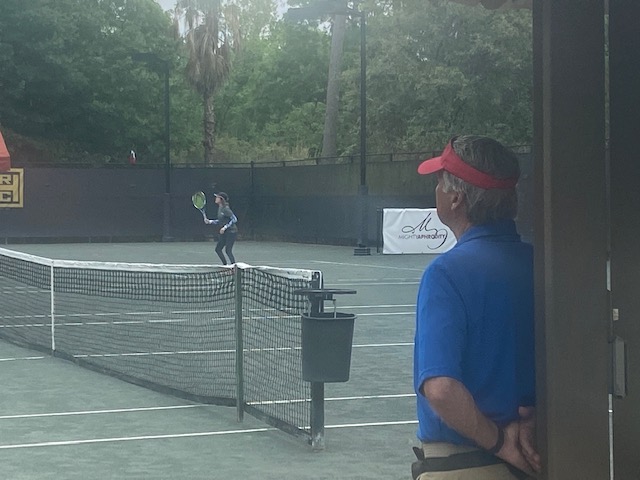
I suspect that most tennis players are not even aware that the Court Monitor role exists. It is not something that appears in the vast majority of matches. However, it does show up in specific contexts. I have most often seen it used in upper age divisions of senior tournaments, where keeping track of the score can occasionally become a challenge. I am also aware that Court Monitors are used as an accommodation for players with special needs, serving a similar purpose by helping ensure that matches proceed smoothly and fairly.
Court Monitors are not responsible for tennis officiating. Instead, they serve as a presence on the court or within a group of courts. They are available to mediate disputes, help track scores when needed, and support the smooth flow of play. In many events, especially at the recreational level, Court Monitors have the most visibility into what is actually happening during a match.
The 2026 update clarifies who is permitted to serve in that role. Adults acting as Court Monitors must now be Safe Play Approved. In addition, minors may serve as Court Monitors only under specific conditions, including appropriate supervision and restrictions designed to ensure that interactions with players are observable and appropriate.
Safe Play Approved refers to the USTA’s participant safety program, which establishes baseline requirements for adults who serve in certain roles within USTA tennis. The process includes a background check, completion of SafeSport training, and agreement to standards designed to promote safe and appropriate interactions with players, particularly minors. It is part of a broader effort across youth and recreational sports to formalize expectations around conduct, supervision, and accountability. I am currently Safe Play Approved and thus have direct experience with this initiative.
Across youth sports and recreational activities, there has been an increasing emphasis on policies designed to protect participants and establish clear standards for adult involvement. The USTA’s Safe Play program is part of that movement, and this update aligns the role of Court Monitors with those expectations.
Unlike some of the other updates in the 2026 Friend at Court, this one directly affects how events are staffed and operated. When Court Monitors are used, organizers must now ensure that individuals assigned to that role meet Safe Play requirements. That influences who is eligible to serve in those positions and creates a personnel constraint that cannot be quickly satisfied or waived.
From a player’s perspective, the change may be less visible, but still meaningful. Court Monitors play a key role in certain contexts. Clarifying the qualifications for that role reinforces the expectation that those responsibilities are carried out by individuals who meet defined standards of conduct and accountability.
This update also fits into a broader theme that has emerged throughout the 2026 rulebook. Many of the changes this year do not alter how tennis is played. Instead, they refine the structures that support the sport. Whether through technology, governance alignment, inclusion, or now Safe Play requirements, the rulebook is continuing to evolve around the game rather than within it.
With that, we conclude our coverage of the 2026 Friend at Court updates. Next Wednesday, we will return to our sequential exploration of The Code and refocus on the principles that govern how most tennis matches are actually played. Now… where were we?