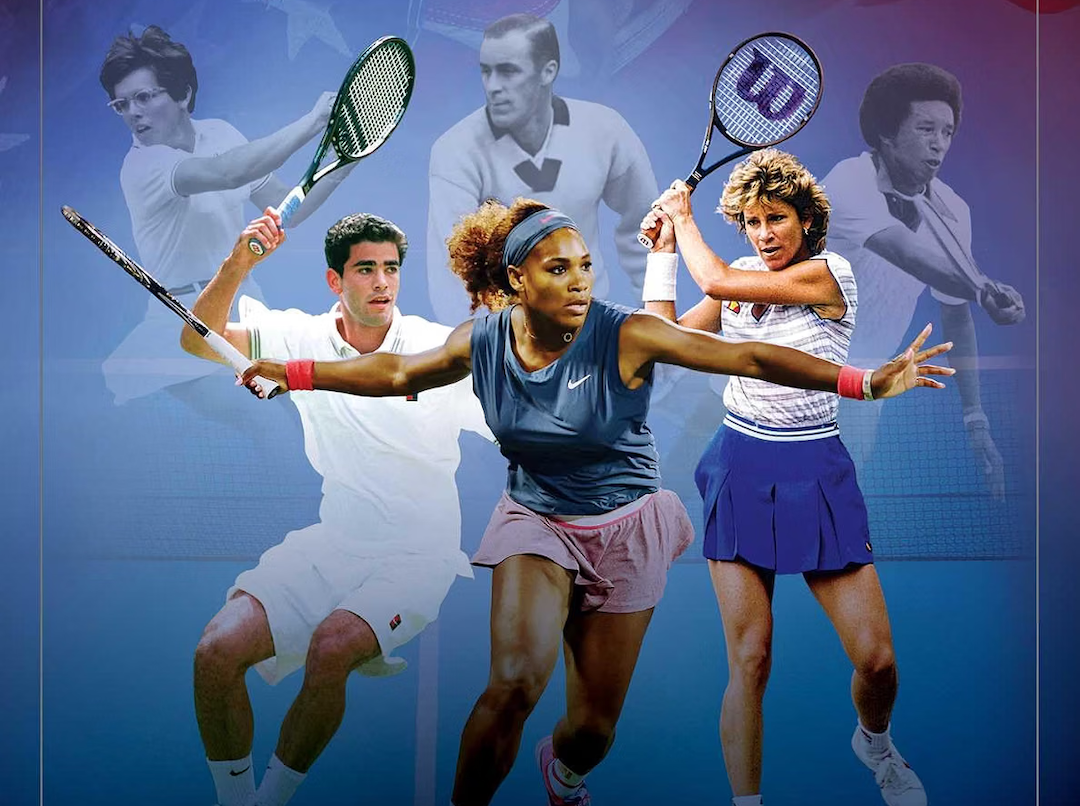
Most tennis books are written for people who already love the sport. ACE: The Times & Style of Tennis is about why the broader culture loves tennis style.
I struggled at first to find my relationship with this book because it does not fit neatly into any of the categories that normally populate my tennis bookshelf. More importantly, fashion and style are not really my thing. Yet somewhere along the way, I realized that author Sunita Kumar Nair was exploring an angle I would not otherwise have considered. Tennis is a sport with cultural influence that extends far beyond the court.
One of the book’s more valuable contributions is the way it forced me to think more deeply about the concept of the “collab,” as the cool kids call it. Sport and fashion are fundamentally different disciplines. One is concerned with athletic performance while the other focuses on aesthetics, identity, and cultural expression. Bringing those worlds together requires intentional partnerships. The collab has become a powerful force in shaping how tennis is presented and consumed by audiences who may care more about the look than the on-court result.
While ACE isn’t presented as a history book, it effectively functions as color behind how tennis players have long functioned as fashion icons. Suzanne Lenglen stands out as an early example. Lenglen wore designs from Jean Patou and insisted that clothing should “free the body.” Her decision as the first to shorten her skirts challenged existing conventions. What appears today as a simple design choice carried broader implications about freedom, athleticism, and the evolving role of women in society.
That theme reappears throughout the book. As always, some of the most insightful observations come from Billie Jean King, who argues that what women wear on the tennis court often reflects where women stand more broadly within society. Tennis apparel can be viewed as a marker of changing expectations, expanding opportunities, and shifting cultural norms.
The book is also filled with smaller stories that reveal the unexpected ways style intersects with competition. I was particularly surprised to learn that Andre Agassi’s transition from bright, flamboyant colors to darker and more muted tones later in his career was not simply a matter of maturity or changing tastes. According to the book, it was a strategic decision. Agassi believed darker colors made it harder for opponents to identify his precise position on the court. Whether the effect was large or small is almost beside the point. The story itself illustrates how elite athletes can think differently about even the smallest details.
Similarly fascinating is the story of Fred Perry and his iconic laurel wreath logo. The book explains how the symbol was borrowed from the All England Lawn Tennis Club’s victory medallions and places it within the context of Perry’s complicated relationship with Wimbledon. Throughout his life, Perry felt underappreciated by the club despite his accomplishments.
The release of this book coincidentally intersected with a current moment in the sport. As I was reading it, Naomi Osaka was unveiling one of her most fashion-forward looks at Roland Garros. Her comments in the book capture the broader argument the author is making:
“I like to think of the tennis court as a stage, and we are entertainers. Sure, we are entertaining by playing tennis, but I also enjoy being creative with all of the other details that I can control, whether it be my hair, my outfit, accessories, et cetera.”
That viewpoint may not resonate with every tennis fan, but it perfectly explains why tennis occupies such a unique place in popular culture. Unlike many sports, tennis allows athletes to express individuality while competing because it is an individual sport. The player, the performance, and the presentation are often inseparable.
By the time I finished ACE: The Times & Style of Tennis, I still would not describe myself as a fashion enthusiast. What I gained instead was a greater appreciation for why tennis has maintained such cultural relevance for more than a century. The sport is not merely competition but identity and self-expression.
As I said at the top, this is a book that does not fit neatly into any of the standard categories for tennis books. Rather, it explores why tennis is seen the way it is. That distinction makes it one of the more unusual tennis books I have read, and ultimately, one of the more thought-provoking.

ACE: The Times & Style of Tennis (<- Sponsored Link)
Fiend At Court participates in the Amazon Associates program and receives a paid commission on any purchases made via the links in this article. Details on the disposition of proceeds are available on the “About Fiend at Court” page.