This season, the NBA is facing one of the most visible examples of tanking in recent memory, with several teams effectively racing to the bottom of the standings rather than trying to win every night. A number of franchises have been criticized for sitting healthy star players late in games or otherwise managing lineups in ways that make competitive outcomes feel secondary to improving draft lottery odds. The league even fined the Utah Jazz and the Indiana Pacers recently for what it deemed violations of its player participation rules, and independent observers have pointed to teams’ strategic losses as clear evidence that the incentives in the draft system are influencing on-court behavior.
NBA Commissioner Adam Silver has publicly acknowledged that the problem is worse this year than in “recent memory,” and he made it one of the key topics of discussion during All-Star weekend. Silver told all 30 general managers that the league plans to implement anti-tanking rule changes for next season in an effort to realign incentives and preserve competitive integrity. The proposals being floated include locking in lottery odds early, flattening draft lottery probabilities, basing lottery position on multi-year records, and preventing teams from repeatedly picking in the top tier. Owners like Phoenix Suns majority owner Mat Ishbia have echoed Silver’s concern, calling tanking “losing behavior” that disrespects the game and fans, while others, such as Mavericks minority owner Mark Cuban, have controversially suggested the league should accept tanking as part of the product.
Under the current draft lottery structure, teams with the worst records receive the highest odds of securing top draft picks. The lottery itself was originally designed to prevent an outright race to the bottom by removing the guarantee that the very worst team would automatically receive the top selection. It was a reform meant to discourage deliberate losing and to preserve competitive balance. Yet even with flattened odds, the teams clustered at the bottom still enjoy materially better chances than those competing in the middle. The guarantee may be gone, but the gradient remains. In theory, the system promotes parity by helping struggling franchises rebuild. In practice, it still rewards failure enough to make strategic losing rational. In fact, it arguably makes it even more widespread. This is what makes the current moment so instructive. A well-intentioned reform designed to curb tanking has not eliminated the incentive. It has reshaped and arguably expanded it.
Fans buy tickets expecting to see legitimate competition. They deserve to watch professional athletes trying to win the games in front of them. A system that rewards strategic losing undermines credibility, competitive integrity, and the product.
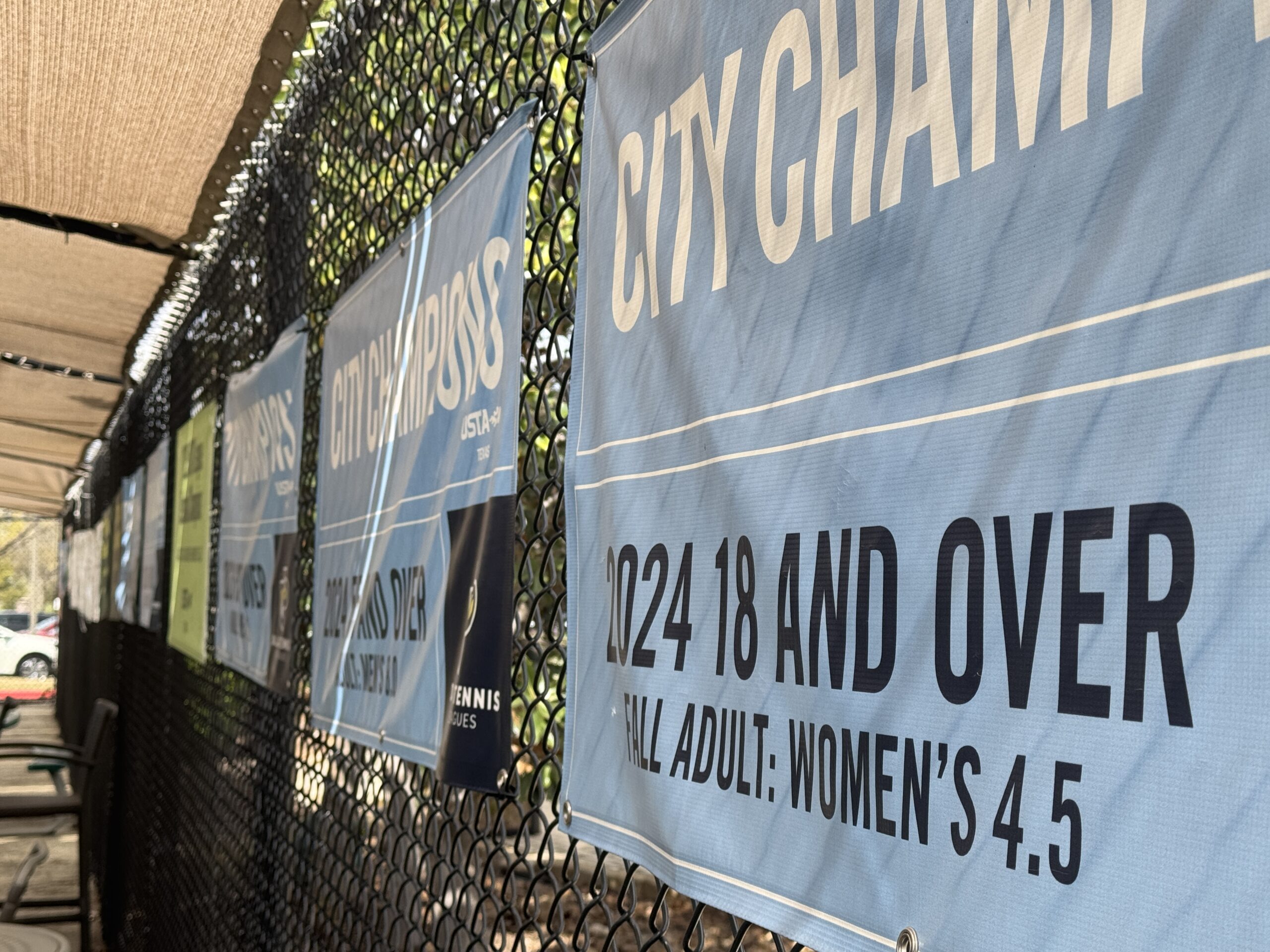
Tanking is also a problem in recreational tennis, but our cultural standard is to look the other way and pretend that it isn’t.
The USTA’s NTRP system is built around a dynamic rating algorithm that determines a player’s competitive level. Win consistently, and the computer moves you up. Struggle, and it moves you down. The stated objective is competitive balance, which is a worthy goal. Yet the structure also creates incentives that encourage players to manage their outcomes to remain eligible at a preferred level, thereby increasing their chances of winning Sectional and National championships.
Tanking behavior is subtle and almost impossible to prove. It is overly simplistic to assume that tanking only appears as a blatant, lopsided loss. In tennis, the practice is far more nuanced. It can look like having an “off” day in a match that has no bearing on playoff qualification. It can take the form of winning while carefully managing the margin. A 6-4, 6-4 result may carry different rating implications than a 6-0, 6-1 scoreline, even if the competitive gap between players is the same. In a system where score differentials matter, players become aware that how they win can influence future eligibility. No one needs to lose outright for the incentive to distort behavior.
What makes this particularly difficult to address is that tennis performance is inherently subjective. Bad days happen. The line between ordinary competitive variance and strategic underperformance is far from clear. That ambiguity provides cover. It also makes enforcement nearly impossible without over-policing legitimate fluctuations in play.
The result is not widespread corruption. It is something more subtle and more corrosive. The system quietly rewards restraint in moments when full competitive expression would otherwise be the obvious choice. When players must think about how much to win, not simply whether to win, the incentive structure has already shifted the focus away from pure competition. When the system rewards positioning oneself at the top of an artificial tier rather than pursuing continuous improvement, it shifts the focus from maximizing performance to preserving status.
Competitive games function best when every participant is incentivized to be as strong as possible in the present. When the rational move becomes optimizing future placement instead of pursuing current excellence, something foundational changes. The NBA is confronting that reality because the cost is visible and it impacts the fan experience. In tennis, those same factors impact the player experience.
The easiest path for everyone is to defend the USTA League usage of the NTRP ratings system as functioning as intended. Indeed, many players compete in good faith. The culture of grassroots tennis leans heavily toward self-regulation and rule-following, and that standard matters. But culture can only compensate for structural incentives up to a point. If a competitive framework makes it rational to lose in order to win later, then it embeds a conflict between integrity and optimization.
If a competitive framework makes it rational to lose in order to win later, then it embeds a conflict between integrity and optimization. The NBA is openly grappling with that conflict because it affects fans, revenue, and public trust. League tennis experiences a quieter version of the same tension, one that primarily impacts the player experience and the meaning of competition itself.
The easiest response is to insist that the NTRP system is functioning as designed. In many respects, it is. It produces close matches. It levels play. It gives players championship pathways. But systems do more than produce outcomes. They shape incentives. And incentives shape behavior.
Tennis prides itself on integrity. It is largely self-officiated and depends on honesty and good faith. That cultural foundation is real. Yet culture should not have to compensate for structural pressures that encourage players to think about how much to win rather than simply striving to be the best they can be.
The NBA’s current dilemma is not ultimately about losing. Rather, it is about alignment. Do the rules reward what the sport claims to value? That is the question worth asking in tennis as well.
- Reports: NBA plans to add anti-tanking rules next season, Reuters, February 19, 2026.