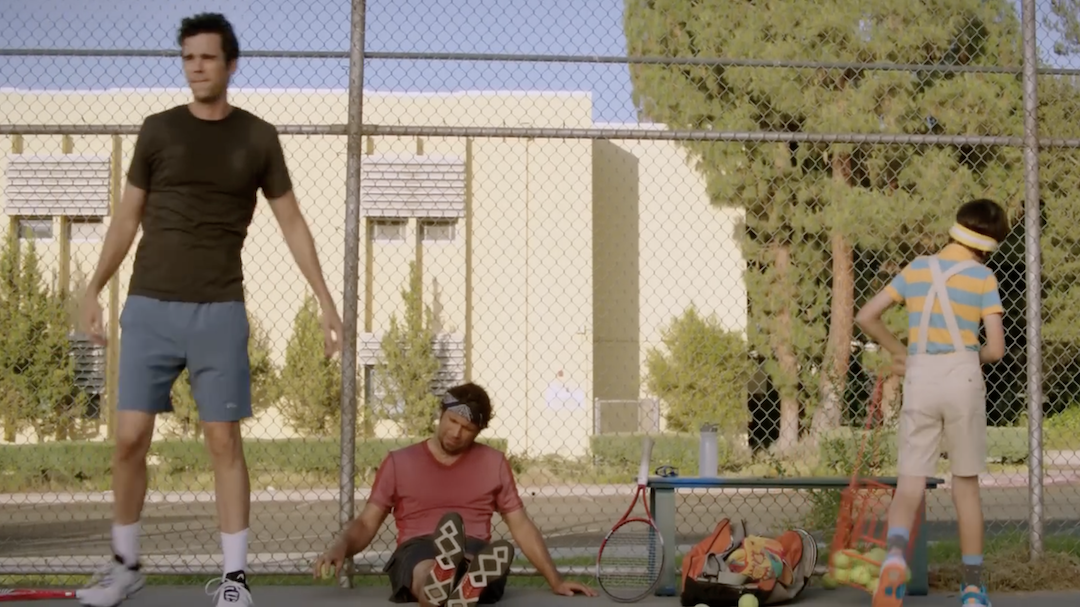
The Australian Broadcasting Corporation recently released a three-episode dramatization focused on Evonne Goolagong Cawley. The series is not a documentary but rather a dramatization based on the true story of the Australian legend’s life and rise to tennis stardom. Before every episode, a disclaimer notes that some events and characters have been fictionalized for narrative purposes. That framing is responsible, but it slightly changed my job as a viewer. While I enjoyed the story, I tried hard throughout to remain alert to the places where compression, simplification, and invention might be smoothing out the narrative.
Consequently, while I enjoyed the series immensely, I kept finding myself wondering how much of what I was seeing really happened. It also made me appreciate how little I knew. While I was familiar with the broad arcs of Goolagong’s tennis career, having closely followed her as it unfolded, I was unaware of certain aspects of her life that would resonate only with an adult. The dramatization was much messier than I had expected. The show’s tone is reflective rather than triumphant, and it spends real time on the human context around the tennis, which I appreciated. Still, the more the narrative drew me in, the more I felt compelled to verify the edges.
Despite the increased cognitive load, I found the series to be more entertaining than your average tennis-centric documentary. The dramatization succeeds through its nonlinear storytelling. Rather than proceeding neatly from childhood to stardom, the narrative moves back and forth across different phases of Goolagong’s life, allowing moments of triumph to mingle with vulnerability and doubt. That choice gives the story more texture than a conventional hero’s arc. Victories were never presented in isolation, and setbacks were more than mere obstacles on the way to greatness. By juxtaposing different versions of the same person at different stages, the series makes clear that the costs and consequences of success are not evenly distributed over time. The effect is to make the story feel less like a highlight reel and more like a lived experience, one that unfolds unevenly and sometimes uncomfortably.
One of the most important moments for me came in the closing credits. Footage of Goolagong on set with Lila McGuire, who portrayed her in the show, provided reassurance that she was onboard with the project. That alone does not magically answer the question of which aspects were literal and which were shaped, but it does convey a sense of endorsement. That made the series feel less like a story taken from her, and more like a story made with her, or at least with her blessing. ABC’s own materials also credit Evonne and Roger Cawley in a direct collaboration role on the production, which is consistent with that impression.
The best sports dramas do not merely recreate sporting events. They help the audience understand what the wins cost and why it matters. That is where Goolagong is most effective. At its core, it is a tennis story. However, it is also a story about the machinery around a gifted athlete, and about how an athlete’s public image can conceal a more complicated private experience.
Additionally, the curiosity Goolagong sparked in me made me finally bite the bullet and order Goolagong’s biography from an Australian used-book seller after failing to find a reasonably priced copy in the United States. I do not have it yet, and international shipping means it will arrive on its own schedule, not mine. Realistically, my review is probably slated for the Australian Open next year, which feels oddly fitting. Tennis stories land differently when read against the rhythm of the tour, and this one seems like it should be paired with contemporary tennis down under.
If you watch Goolagong, my suggestion is to treat it the way the show itself seems to ask to be treated. Let it work as drama. Then let it provoke you into reflection. Not only on Goolagong’s place in tennis history, but on how tennis history gets packaged, retold, and transmitted to people who were not there. If you walk away wanting to check sources, that is not a flaw in your viewing but rather an important part of the point.
Goolagong is supposed to be streamable in the United States via ABC (Australia) iview. However, direct access did not work for me. I finally resorted to using a VPN set to represent my location in Melbourne. If you are a U.S. viewer who is trying to watch this series and running into streaming issues,, that workaround may also work for you.