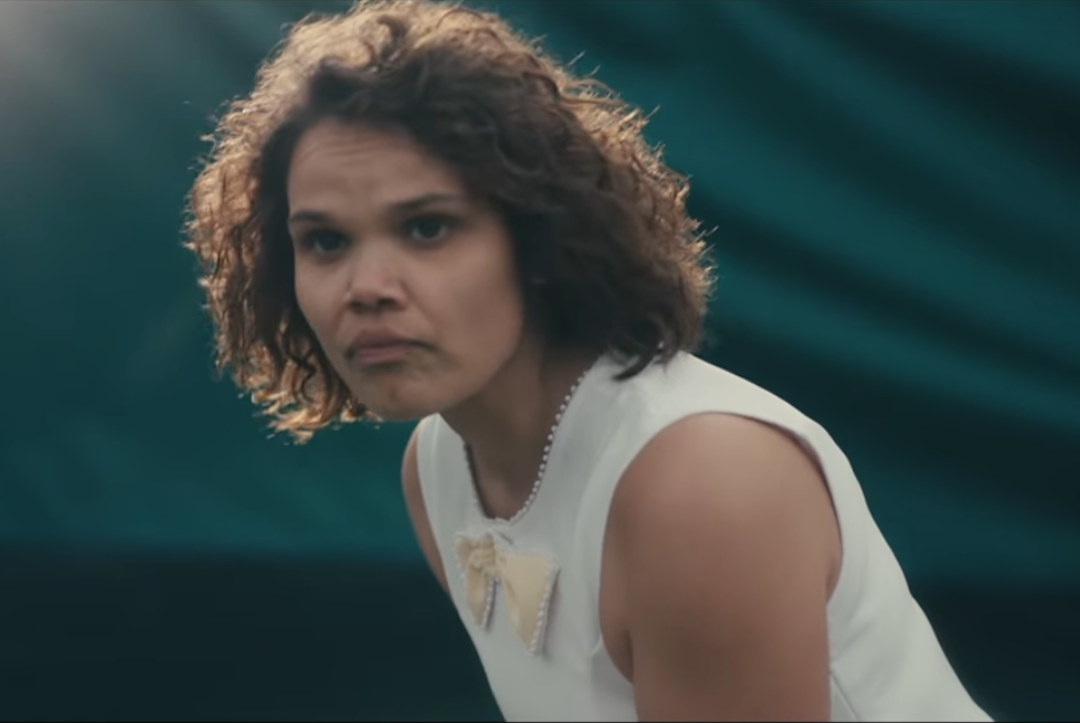
I recently had the opportunity to screen the Rex Miller 2014 documentary, Althea, as a part of the Friday night entertainment at a recent USTA Texas Summit. I must say, whoever is making the programming decisions for that conference should continue to pursue that general content idea. Including tennis documentaries at USTA meetings is a move I strongly endorse. It is a terrific way for the organization to leverage its immense negotiating power to deliver access to films that individuals currently lack access to via commercial streaming platforms.
Going in, I was very confident that I had already seen Althea and was equally certain I had reviewed it on this site. After a determined search for the “missing” post, I had to face the reality that my memory was wrong. Again. I never watched it, and I definitely never wrote about it. Even though all the material was familiar to me from the stack of Althea Gibson biographies I’ve read and definitely reviewed on this site, it was refreshing to see it presented on a big screen in a hotel ballroom. Editing and narrative matter, and Miller’s film makes choices that bring out imagery and emotional impressions in ways that books cannot.
One thread that struck me harder on screen than in print was the tension between Gibson’s desire to be welcomed into the upper-middle-class culture of tennis and her simultaneous rejection of it. The film conveys how she desperately wanted recognition and acceptance, but at the same time resisted conformity. That complexity is part of what makes everything she ultimately achieved even more noteworthy.
The documentary also features all-star commentators, including Leslie Allen, Angela Buxton, and excerpts from letters by Alice Marble and the tennis sportswriter Paul Fein, among others. Each of those voices adds depth and authenticity to the narrative. Another unique dimension highlighted by the documentary was the life of the so-called “tennis bums” of the pre-Open Era. These were athletes forced to live off the generosity of wealthy patrons and prohibited from making money off their own sporting success. As a comprehensive whole, Althea is a stark reminder that tennis has always been a game fraught with spoken and unspoken social rules, and Althea Gibson was never well-equipped—nor inclined—to bend to those expectations.

Althea (<- Sponsored Link)
I genuinely enjoyed the film and recommend it without hesitation. For anyone who hasn’t read one of the many biographies of Althea Gibson, this is a compelling way to consume her story. And even for those who have, the film offers something unique. It is well worth the watch, especially for those unwilling or unable to muster the attention span for a full-length biography of the first African American to win a major Grand Slam tournament.
Fiend At Court participates in the Amazon Associates program and receives a paid commission on any purchases made via the links in this article. Details on the disposition of proceeds are available on the “About Fiend at Court” page.